
August 27, 2026
Ohio floors take a beating.
Snow and road salt get tracked in during winter. Spring brings moisture and temperature swings. Summer adds heat and humidity. Through it all, vehicles, tools, equipment, and everyday foot traffic continue putting stress on the concrete.
Over time, those conditions can leave an unprotected garage floor stained, pitted, cracked, or deteriorating at the surface.
That's why choosing a garage floor coating in Ohio isn't just about making the space look better. It's about protecting the concrete from the conditions it faces year after year.
A professionally installed polyaspartic floor coating is particularly well suited for that job. Here's why.
Concrete may look solid, but it's naturally porous. That means an unprotected slab can absorb moisture.
In Ohio, moisture becomes an even bigger concern because temperatures regularly move above and below freezing during the winter months.
When moisture enters concrete and temperatures drop, that moisture can freeze and expand. Repeated freeze-thaw cycles can contribute to surface deterioration, especially when the concrete is already damaged or exposed to salt and other contaminants.
Then warmer weather arrives, bringing a completely different set of conditions.
Over the course of a year, an Ohio garage floor can experience:
Protecting the slab means choosing a floor system designed to handle more than one season. Homeowners comparing their options can also read our 2026 guide to garage floor coatings for a broader look at coating systems and what goes into a professional installation.
One of the biggest winter threats isn't the snow itself. It's what comes into the garage with it.
Vehicles pick up road salt, brine, snow, and slush while driving. Once parked inside, that mixture melts and ends up on the garage floor.
On bare concrete, moisture and contaminants can penetrate the porous surface. Over repeated winters, homeowners may begin noticing staining, rough areas, scaling, or small pits where the surface has started to deteriorate.
A polyaspartic coating creates a non-porous finished surface over properly prepared concrete. Instead of allowing salty water and other contaminants to readily soak into the slab, the coating provides a durable protective barrier that's much easier to clean.
For an Ohio garage, that's an important advantage every winter.
Garage floor deterioration doesn't always happen all at once. It can develop gradually over years of exposure.
Take a closer look at your concrete and watch for:
Some cosmetic damage can often be repaired during professional floor preparation. More significant movement or structural concerns should be evaluated before a coating is installed.
The important part is addressing the condition of the concrete instead of simply covering it.
A floor coating is only as good as the surface underneath it.
Applying a coating over dirty, damaged, or poorly prepared concrete can prevent it from bonding correctly. That's one reason proper preparation is such an important part of a professional installation.
At Poly Guys, the process starts by diamond grinding the concrete. This removes surface contaminants and creates the proper profile for the coating system to bond to the slab.
Cracks and pitting are repaired as part of the preparation process so the coating isn't simply hiding existing damage.
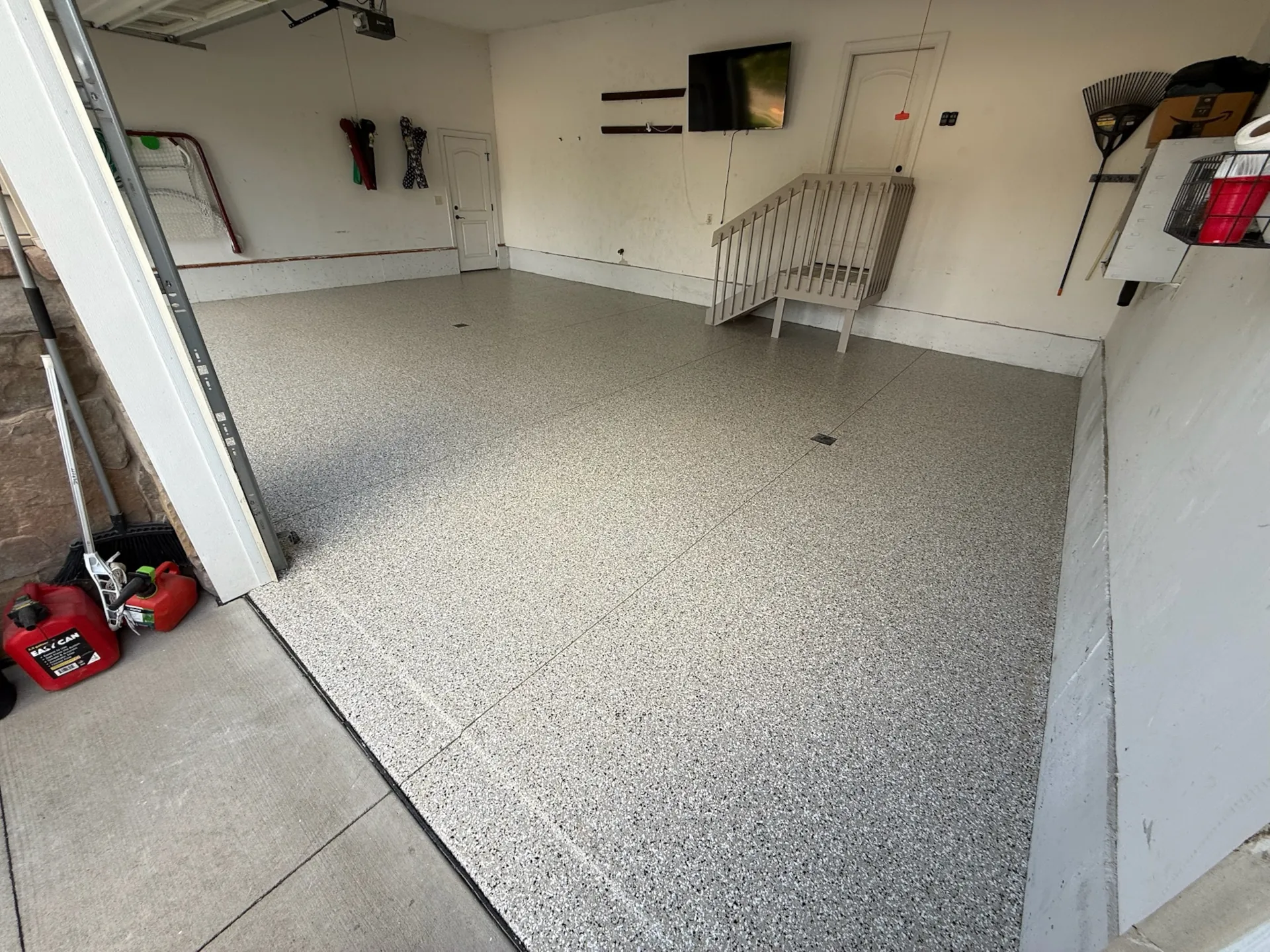
Once the slab is properly prepared, we apply a penetrating polyurea base coat. Polyurea is a durable coating material designed to create a strong bond with the prepared concrete. Decorative flake is then broadcast across the floor for color and texture, followed by a protective polyaspartic topcoat.
The goal isn't to cover up the old floor. It's to restore and protect it correctly.
A damaged garage floor doesn't automatically mean the entire slab needs to be replaced.
Cracks, pits, and worn areas are common in older Ohio garages. Depending on the condition of the concrete and the cause of the damage, many of these areas can be repaired during preparation before the coating system is installed.
This is why an on-site assessment matters.
The slab needs to be inspected to determine what's cosmetic, what can be repaired, and whether there are signs of a larger concrete issue that should be addressed first.
Taking the time to make those repairs helps create a better finished appearance and, more importantly, gives the coating the properly prepared surface it needs.
If you want to see what damaged and unfinished concrete can look like before and after professional work, browse our floor coating project gallery for real projects completed around Northeast Ohio.
Anyone who parks in an Ohio garage knows what the floor can look like after a snowy week.
Slush melts. Salt dries. Dirt gets left behind.
Bare concrete can hold onto that grime because spills and moisture can penetrate its porous surface. A coated floor is much easier to maintain because contaminants remain on the finished surface instead of readily soaking into the concrete below.
Routine maintenance is simple:
Keeping winter contaminants from sitting on the floor for extended periods is good practice with any garage surface.
Weather isn't the only thing your garage floor has to handle.
Vehicles place significant weight on the slab. Tools get dropped. Storage bins are moved. Lawn equipment rolls across the floor. Many garages also double as workshops, home gyms, hobby spaces, or additional entertaining areas.
Polyaspartic systems are designed to resist abrasion, impacts, chemicals, oil, and everyday wear.
The decorative flake also adds texture to the finished surface, helping create a slip-resistant floor while giving the garage a clean, finished appearance.
It's protection designed for a garage that's actually being used.
UV exposure can also affect certain floor coatings.
Garages with windows or doors that remain open for extended periods can receive significant sunlight. Some traditional coating materials can discolor or yellow with UV exposure.
Polyaspartic topcoats are UV stable, helping the floor maintain its appearance over time. This is one of several important differences homeowners should understand when comparing polyaspartic and epoxy floor coatings.
Poly Guys backs its coatings with lifetime UV protection against yellowing, along with a 15-year transferable warranty covering peeling, blistering, and delamination. Full warranty details are provided with every proposal.
Durability doesn't have to mean a lengthy installation.
Most Poly Guys garage floor coating projects can be completed in one day. The fast-curing system is typically walk-ready within hours and reaches full cure in about 24 hours under normal conditions.
That means less disruption and a faster return to using the garage.
The speed comes from the coating chemistry, but the preparation isn't rushed. Grinding, repairs, coating application, decorative flake, and the protective topcoat are still completed as part of the system.
A garage floor in Northeast Ohio has to deal with much more than parked cars.
It needs to stand up to winter road salt, melting snow, moisture, temperature changes, summer heat, spills, tools, equipment, and everyday traffic. Those conditions can take a toll on exposed concrete over time.
A properly prepared polyurea and polyaspartic floor system creates a durable, non-porous surface designed to protect the concrete underneath while making the garage easier to clean and maintain.
More importantly, the process starts with the concrete itself. Proper grinding and repairs help make sure you're not simply hiding an old garage floor under a new coating.
That's how we approach garage floors at Poly Guys: do it once, do it right.
If your garage floor is cracked, pitted, stained, or showing the effects of Ohio winters, contact the Poly Guys today!