
January 12, 2026
A garage floor takes more abuse than almost any other surface in a home. Hot tires, winter salt, chemicals, dropped tools, freeze-thaw cycles, moisture, and day-to-day wear all take a toll. Coating the floor protects the concrete, improves the look of the space, and adds long-term durability, but not all coatings perform the same. This 2026 guide breaks down what homeowners should expect, what’s changed in the world of garage floor coatings, and why more people in Ohio are steering away from epoxy and choosing stronger systems built to last.
Homeowners expect a coating to look good, but appearance is just the start. The right system should reinforce the concrete, resist damage, and hold up to the harsh swings of Ohio weather. A strong coating checks several boxes:
Many older coating types fall short, especially in climates where freeze-thaw cycles and salt damage are constant threats. That’s why 2026 continues to show a shift away from traditional epoxy.
For decades, epoxy was the standard. It was accessible, relatively inexpensive, and looked good on install day. The issue came months later. Epoxy often yellows in sunlight, chips or peels under hot tires, and becomes brittle over time. In Ohio, these weaknesses show up quickly, especially in garages and outbuildings with temperature swings.
Epoxy also has a long cure time, sometimes stretching several days. For homeowners who rely on their garage every day, that’s inconvenient and unnecessary with newer technologies available.
These limitations are exactly why polyaspartic coatings have become the preferred solution.
Polyaspartic coatings outperform epoxy in almost every category. They bond better, cure faster, and retain flexibility—helping them move with the slab instead of cracking or peeling. When installed correctly, the result is a surface that’s up to four times stronger than epoxy and built to handle constant use.
Key advantages include:
Another major benefit is texture. Decorative chip systems leave a lightly textured surface that adds slip resistance without feeling abrasive. That matters when snowmelt pools on the floor, as traction reduces slips almost immediately.
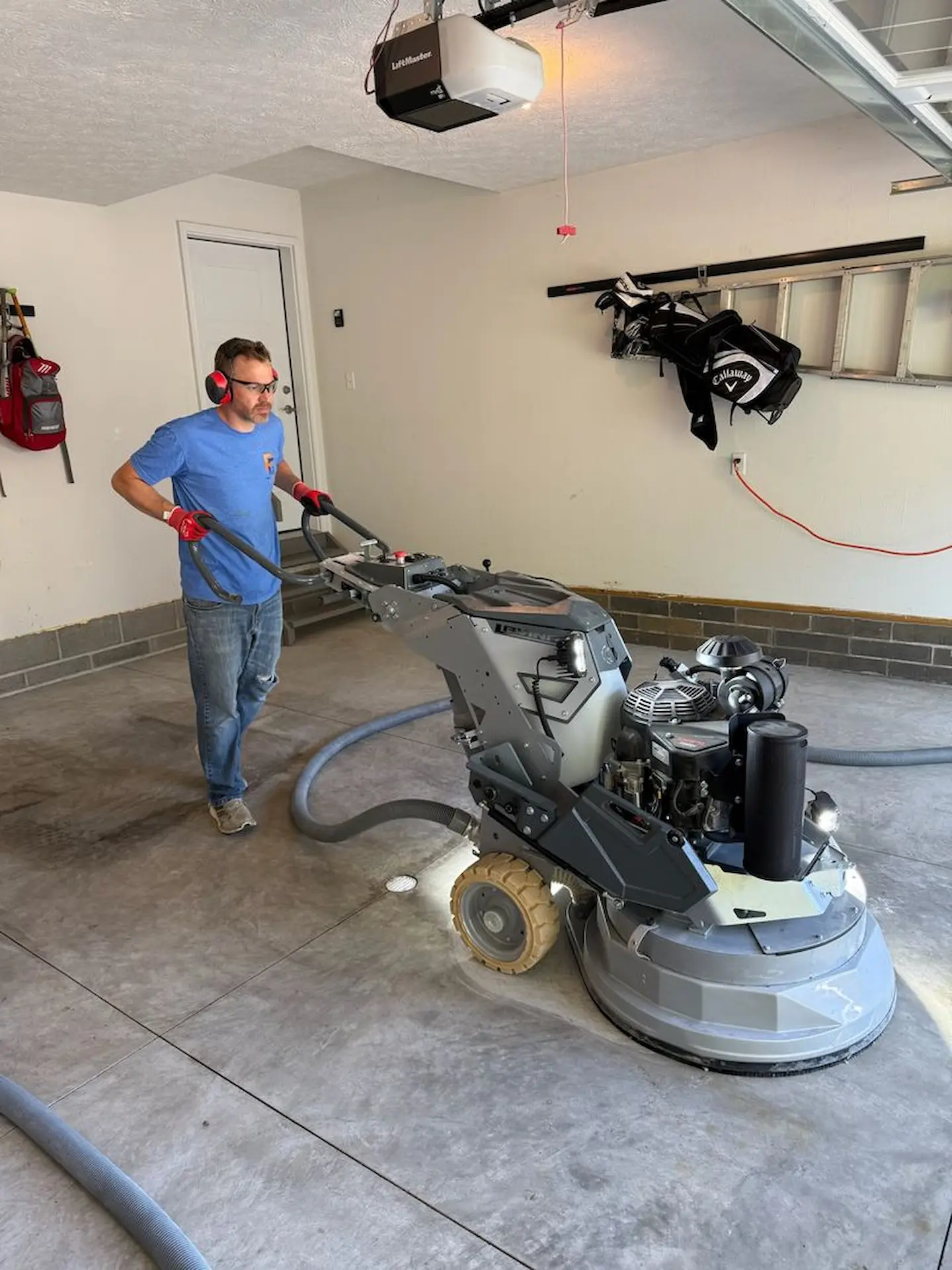
No coating performs well on a poorly prepared floor. Grinding the concrete is the only way to open the pores and create a strong mechanical bond. This is a step many cut-rate installers skip, and it’s the reason their coatings fail early.
A professional installation includes:
Skipping even one step can lead to lifting or delamination, especially with the hot-tire pressure that comes from everyday vehicle use.
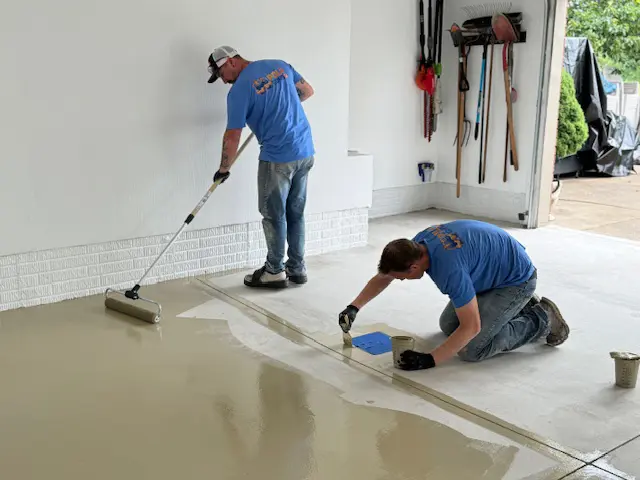
A well-organized crew can coat most garage floors in a single day. Homeowners usually receive a clear timeline:
Most floors are ready for foot traffic within a few hours. Vehicles can typically return to the garage the next day, depending on temperature and humidity. That fast turnaround is one of the biggest advantages over epoxy.
Homeowners are leaning toward coatings that complement modern garages and finished spaces. Popular trends include:
The look is customizable, but durability remains the top priority. See the gallery for some of our past projects!
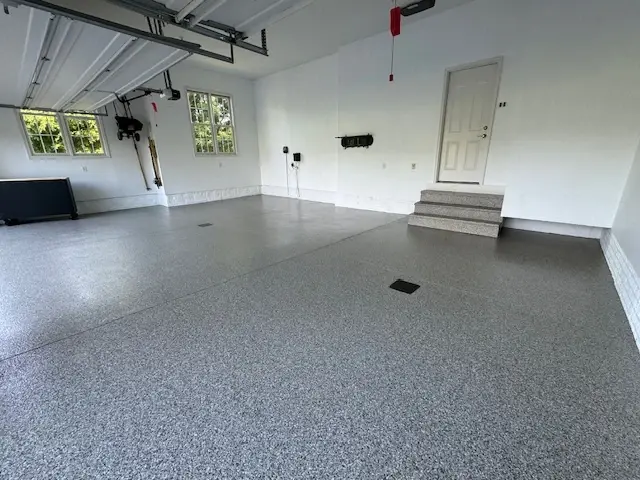
DIY kits appeal to budget-focused homeowners, but they come with clear risks. Without grinding equipment, industrial vacuums, and professional-grade materials, a DIY floor rarely bonds correctly. It may look good on day one, but hot tires and winter salt start causing issues fast.
A professional-grade system:
When done right, a coated garage floor becomes part of the home’s long-term structure, not a temporary upgrade.
If the goal is a cleaner, brighter, more durable garage space, the choice is straightforward. A polyaspartic garage floor coating strengthens the concrete, improves safety, resists damage, and holds up season after season. For homeowners in Ohio dealing with harsh winters, road salt, and heavy moisture, the investment pays off quickly.
A stronger floor means fewer repairs, less maintenance, and a garage that feels more like an extension of the home. The Poly Guys are here to help, contact us today to get started!