
September 22, 2026
An Ohio garage floor has a tough job during winter. Every time a vehicle pulls into the garage, it can bring snow, ice, road salt, dirt, and moisture along with it. That mixture eventually melts onto the floor, creating puddles that sit on bare concrete for hours.
Over one winter, that might not seem like a major concern. Repeat the process year after year, however, and an unprotected garage floor can start showing the effects.
A professionally installed garage floor coating creates a durable, non-porous surface designed to stand between your concrete and the mess that comes with an Ohio winter.
Road salt helps make winter driving safer, but it's not nearly as friendly to concrete.
Vehicles carry salt into garages on tires, wheel wells, and undercarriages. As snow melts, that salt becomes mixed into the water sitting on the garage floor.
Bare concrete is porous. Moisture can penetrate its surface instead of simply sitting on top.
Repeated exposure to moisture, salt, and freezing temperatures can contribute to surface deterioration over time. Pitting, scaling, staining, and worn areas can become increasingly noticeable.
Protecting the surface limits that exposure.
A quality residential garage floor coating creates a protective barrier over the concrete.
Instead of allowing moisture and contaminants to soak into the slab, the coated surface is non-porous. Water, salt, oil, and other common garage contaminants remain on top where they can be cleaned.
That means less direct exposure for the concrete underneath.
The coating also makes winter cleanup significantly easier. Instead of scrubbing salt stains out of porous concrete, homeowners can sweep away dry debris and clean the coated surface as needed.
Not every floor coating offers the same level of performance.
A polyaspartic floor coating is designed to handle demanding environments where durability, chemical resistance, and temperature changes matter.
For Ohio garages, that combination is particularly valuable.
Polyaspartic systems offer benefits including:
Polyaspartic coatings also maintain some flexibility compared to more rigid coating systems, helping them perform through changing temperatures.
If you’re comparing different coating systems, the differences become even clearer when looking at polyaspartic vs epoxy.
A coated garage floor will still get wet. The coating doesn't make snow disappear or stop vehicles from bringing moisture indoors.
What changes is how the floor responds to that moisture.
Bare concrete can absorb water. A properly installed polyaspartic floor coating creates a sealed surface that prevents spills and snowmelt from readily soaking into the concrete below.
That makes cleanup easier and helps protect the slab.
Homeowners should still remove excessive standing water rather than allowing puddles to remain indefinitely. Good drainage and routine maintenance matter regardless of the coating system.
Protection isn't the only consideration when choosing the best garage floor coating for an Ohio home.
Traction matters too.
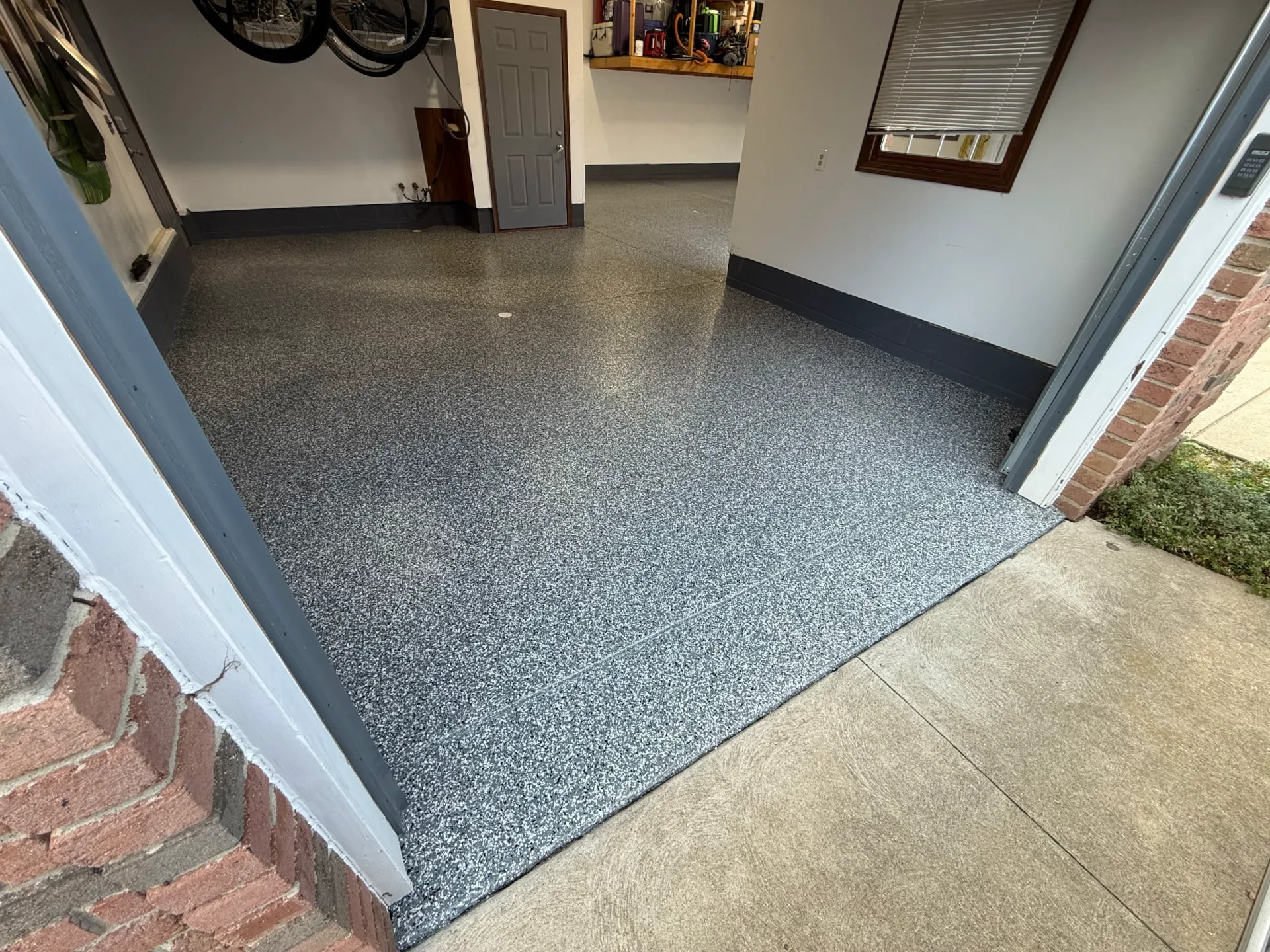
A completely smooth floor can become slippery when covered with snow or water. Decorative flake coating systems add texture to the surface, helping create slip resistance while also giving the garage a finished appearance.
The result is a floor designed around both durability and everyday usability.
A polyaspartic coating can be extremely durable, but the system is only as strong as its bond to the concrete.
That's why professional preparation is critical.
Before coating begins, the concrete should be mechanically prepared to create the correct surface profile. Repair cracks, pits, and damaged areas.
A professional installation generally includes:
Poor preparation can cause even high-quality coatings to peel or delaminate.
For a closer look at the complete system, including preparation, installation, cure time, and what homeowners should expect, see our 2026 guide to garage floor coatings.
Salt and snow get most of the attention, but an Ohio garage faces changing conditions year-round.
Spring brings rain and mud. Summer brings heat and hot tires. Fall brings additional moisture and debris. Winter adds salt, snow, and ice.
The best garage floor coating shouldn't perform well during only one season.
Polyaspartic floor coating systems are particularly well suited for year-round use because they're designed to resist chemicals, stains, abrasion, moisture, and UV exposure.
That year-round durability also matters beyond residential garages. Shops, showrooms, service areas, and other high-use spaces face their own combination of moisture, chemicals, traffic, and wear. Commercial polyaspartic flooring provides the same type of durable, non-porous protection for business and light-commercial spaces.
Protecting the concrete doesn't mean adding another complicated maintenance routine.
A coated garage floor is designed to be easy to keep clean.
Regular maintenance can include:
Because the surface is non-porous, stains and contaminants don't penetrate the floor the way they can with untreated concrete.
That means less scrubbing and fewer permanent reminders of Ohio winters.
A garage floor coating shouldn't just make the garage look better. It should make the space easier to use and help protect the concrete underneath.
That's particularly important in Ohio, where road salt and moisture become part of everyday garage life for several months each year.
A professionally installed polyaspartic floor coating creates a durable, non-porous, stain-resistant surface designed to stand up to those conditions.
Instead of letting another winter take a toll on bare concrete, homeowners can protect the floor with a system designed to handle what gets tracked through the garage door. You can also browse Poly Guys floor coating projects to see completed residential and commercial floors across Northeast Ohio.