
September 15, 2026
Uneven concrete doesn't usually fix itself. A sidewalk that has started sinking, a driveway with low spots, or a patio that's collecting water will often continue getting worse as the soil beneath it shifts.
That makes timing an important part of concrete repair. For Ohio homeowners, fall can be an excellent time to address settled concrete before freezing temperatures, snow, and ice arrive.
Residential concrete lifting can restore many sunken slabs without the cost and disruption of complete replacement. Taking care of those problems in the fall can also help your property head into winter with safer, more stable surfaces.
Concrete is heavy, but the slab itself isn't always the source of the problem. Settlement typically starts underneath it.
Common causes include:
As support underneath the slab disappears, the concrete begins to sink.
Concrete leveling addresses that problem by raising the existing slab and filling the voids beneath it.
Fall gives homeowners an opportunity to correct concrete problems before winter makes them more inconvenient or dangerous.
Uneven sidewalks and driveways become especially problematic once snow and ice arrive. A small height difference between two slabs can already create a trip hazard. Cover that same area with snow, and it becomes much harder to see.
Uneven concrete can also make snow removal difficult. Shovels and snow blowers can catch on raised edges, while low areas collect water that can freeze into ice.
Concrete lifting in the fall helps correct those issues before winter weather arrives.
These problems aren’t limited to homes. Uneven sidewalks, entryways, parking areas, shop floors, and other slabs around businesses can also create safety concerns and become harder to manage during winter. Commercial concrete lifting can correct settled slabs while minimizing disruption to day-to-day operations.
Water is one of the biggest enemies of concrete and the soil supporting it.
A sunken slab can change how water drains across a property. Instead of flowing away from a garage, foundation, or walkway, water may begin collecting in low spots.
That water can find its way underneath the concrete and contribute to additional erosion.
Then winter arrives.
Water trapped around or beneath concrete freezes and expands. Repeated freeze-thaw cycles can contribute to additional movement and deterioration.
Concrete leveling can help restore the intended elevation of the slab and, in many cases, improve drainage before winter.
Polyurethane concrete lifting offers a modern alternative to tearing out and replacing sunken slabs.
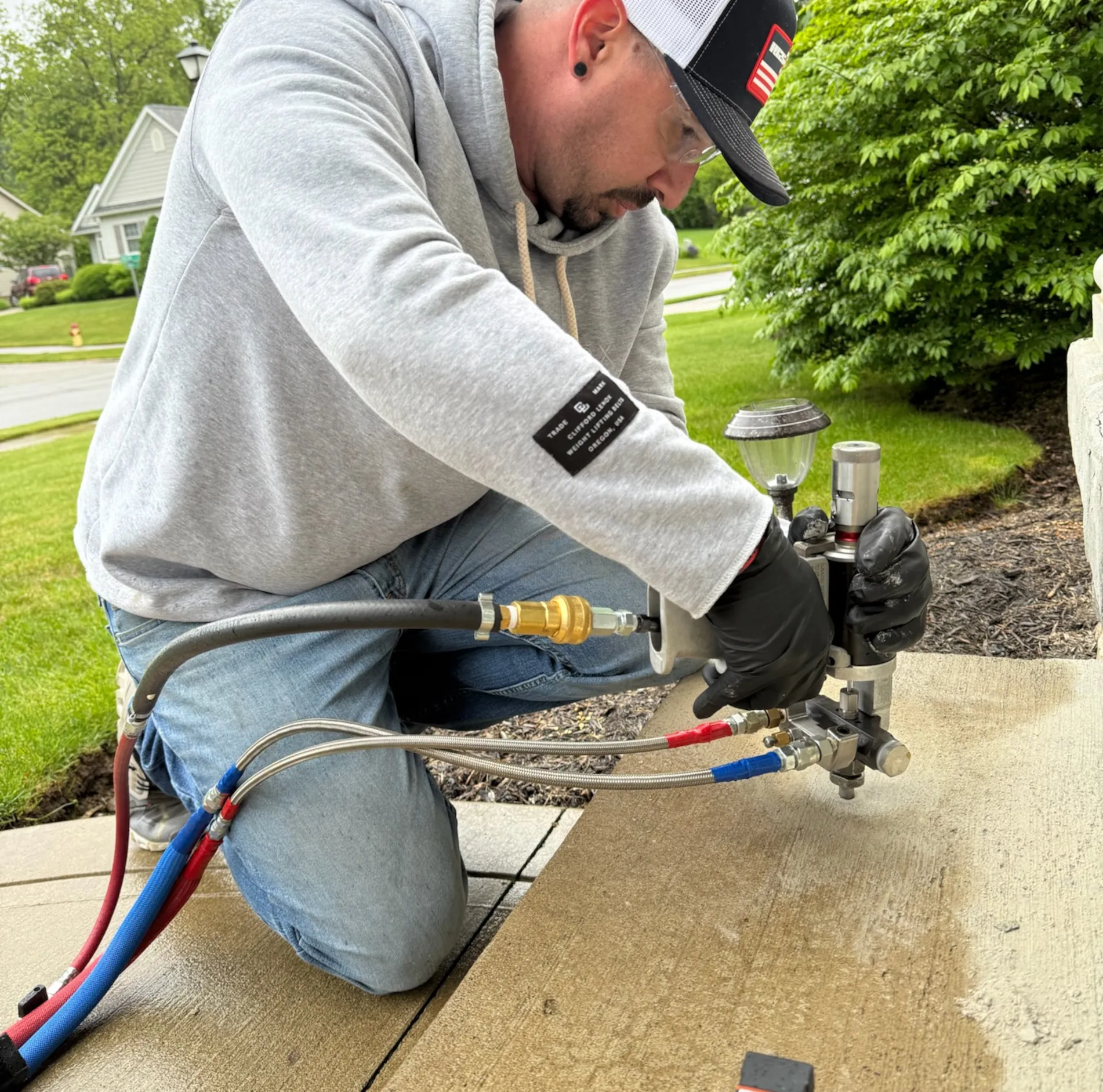
The process begins by drilling small injection holes through the concrete. A specialized polyurethane material is injected underneath the slab.
As the material expands, it fills voids and applies controlled pressure to the concrete above. Technicians carefully monitor the slab and gradually return it toward the proper elevation.
Once cured, the polyurethane provides lightweight, durable support beneath the concrete.
The process requires significantly less disruption than replacement and can often be completed in a matter of hours.
If you're considering lifting your concrete, learn more about what to expect during a concrete lifting project, from the initial assessment through the lifting process.
Replacing a slab means demolition, removal, pouring new concrete, and waiting for it to cure.
Polyurethane concrete lifting is considerably faster.
The material cures quickly, meaning sidewalks, patios, driveways, and other repaired surfaces can typically return to service much sooner than newly poured concrete.
That's particularly helpful during fall, when Ohio homeowners are already trying to finish outdoor projects before colder weather arrives.
Concrete lifting can be used for many areas around a home, including:
Basement floors are sometimes overlooked when discussing concrete leveling. Like exterior slabs, basement floors can develop low spots or settlement when support beneath the concrete changes.
An evaluation can determine if polyurethane concrete lifting is appropriate for the affected slab. You can also view real concrete lifting projects from Poly Guys to see examples of settled concrete before and after lifting.
Concrete lifting is effective, but it can't save every slab.
The condition of the existing concrete matters. A slab that has settled but remains structurally sound can often be lifted. Concrete that is badly deteriorated, extensively cracked, or breaking into multiple pieces may be better suited for replacement.
That's why an assessment should come before choosing a repair method.
The goal isn't to lift every piece of concrete. It's to determine which solution provides the best long-term result.
A small difference in elevation may not seem urgent during summer. Winter changes that.
Snow can conceal uneven surfaces. Ice can make already-sloped concrete more difficult to navigate. Water sitting in low spots can repeatedly freeze.
Correcting the problem before those conditions arrive can make sidewalks, driveways, and entrances safer and easier to maintain.
Fall isn't just the season for cleaning gutters and preparing the yard. It's also a good opportunity to take a closer look at the concrete around your property.
Check for signs your concrete needs lifting, including uneven sidewalk panels, sunken driveway sections, low areas around patios, drainage problems, and settlement in garage or basement floors.
If the concrete itself is still in good condition, polyurethane concrete lifting may be able to restore it without demolition and replacement.
Taking care of settled concrete now can mean fewer hazards, better drainage, and one less problem to deal with when an Ohio winter arrives.