
July 24, 2026
Few homeowners notice their concrete settling until it becomes impossible to ignore. A sidewalk develops a trip hazard, water begins pooling on the driveway, or a patio starts sloping toward the house. When that happens, many people assume they'll be dealing with days of construction, heavy equipment, and a complete concrete replacement.
Fortunately, that's often not the case.
Modern concrete lifting is a fast, minimally invasive process that restores sunken concrete without tearing it out. If you've never had concrete lifting done before, here's what you can expect from start to finish.
Every successful concrete lifting project starts with an inspection.
A professional will examine the affected concrete to determine:
Not every slab is a candidate for lifting. If the concrete is severely deteriorated or broken into multiple pieces, replacement may be the better option. However, many slabs that appear beyond repair are actually excellent candidates for concrete lifting.
One of the biggest advantages of concrete lifting is how little disruption it causes.
Unlike replacement, there is no demolition, excavation, or large construction equipment. The work area is simply cleared of vehicles, furniture, or other obstacles so technicians have access to the concrete.
Landscaping, driveways, and surrounding surfaces typically remain untouched throughout the process.
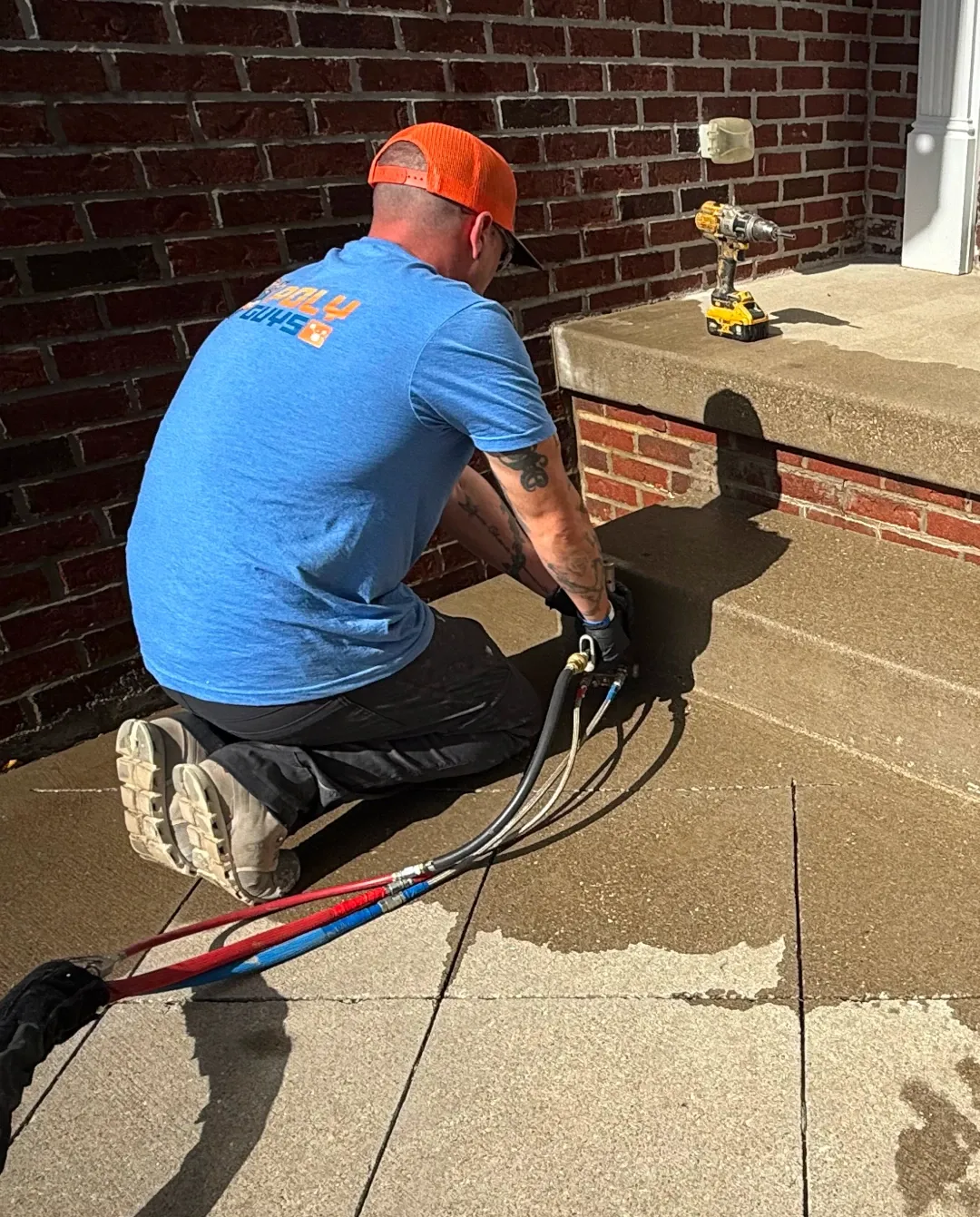
Once the area is prepared, technicians drill several small holes through the concrete slab.
These holes are strategically placed to allow the lifting material to reach the empty spaces beneath the concrete.
Many homeowners are surprised by how small the holes are compared to older concrete repair methods. After the project is complete, they are patched to blend in with the existing surface.
This is where the lifting happens.
A two-part polyurethane material is injected beneath the slab through the drilled holes. As the material expands, it fills empty voids, compacts loose soil, and gently raises the concrete.
Unlike older mudjacking methods that rely on a heavy cement slurry, polyurethane foam is lightweight and designed to stabilize the soil without adding unnecessary weight.
The lifting process happens gradually, allowing technicians to carefully control the movement of the slab.
Concrete lifting is not simply a matter of pumping material beneath the slab.
Throughout the process, technicians monitor the concrete's movement to ensure it returns to the proper elevation. Small adjustments are made as needed to create a smooth, even surface.
This precision helps eliminate trip hazards while improving drainage and restoring the appearance of the concrete.
After the slab has been lifted and stabilized, the injection holes are cleaned and patched.
These repairs are designed to be as discreet as possible. While they may still be visible upon close inspection, they are much less noticeable than the extensive repairs associated with concrete replacement.
Once the holes are patched, the cleanup process begins.
One of the biggest benefits of polyurethane concrete lifting is how quickly the material cures.
In many cases:
Instead of waiting days for new concrete to cure, homeowners are able to get back to normal much faster.
Most residential concrete lifting projects are completed in just a few hours.
The exact timeline depends on the size of the project and the number of slabs being repaired, but many homeowners are surprised by how quickly the work is finished.
Compared to concrete replacement, which can take several days or longer, concrete lifting is significantly less disruptive.
Polyurethane concrete lifting works well for many residential and commercial surfaces, including:
As long as the slab is structurally sound, lifting is often a viable alternative to replacement.
One of the most common questions homeowners ask is whether the repair will last.
Polyurethane foam is designed to provide long-term support beneath the slab. It resists water, won't wash away like loose soil, and maintains its strength over time.
While no repair method can guarantee future soil conditions won't change, polyurethane concrete lifting addresses the underlying support issue rather than simply masking the symptoms.
There's very little homeowners need to do before the project begins.
A few simple steps help everything go smoothly:
After that, your concrete lifting team handles the rest.
Many homeowners are surprised by how simple a concrete lifting project actually is. What seems like a major repair often takes just a few hours and requires very little disruption to your property.
Instead of living with uneven concrete or paying for full replacement, polyurethane concrete lifting restores the existing slab by stabilizing the ground beneath it. The result is a safer, more level surface that's ready to use quickly.
If you've noticed sinking concrete around your home, scheduling a professional evaluation is the first step toward determining whether concrete lifting is the right solution.