
April 10, 2026
When concrete starts to sink, most homeowners want the same thing: a repair that fixes the problem without tearing everything out.
Two common methods are mudjacking and polyurethane concrete lifting. Both are used to raise settled concrete, but they work very differently. The material used, the precision of the lift, and the long-term results are not the same.
If you are comparing repair options for a driveway, sidewalk, patio, or garage slab, it helps to understand why more homeowners are moving away from older slurry-based methods and choosing polyurethane foam injection instead.
Mudjacking is an older concrete leveling method that uses a heavy slurry mixture pumped beneath the slab. That mixture is usually made from water, soil, sand, and cement.
As the material fills the empty space below, it pushes the concrete upward.
Mudjacking can lift a slab, but the process comes with some drawbacks that matter when you are looking for a repair that will hold up over time.
The biggest issue is weight. The slurry used in mudjacking is much heavier than the soil it replaces. If the ground below is already unstable, that added weight can lead to more settling later on.
Other common drawbacks include:
Mudjacking may still be used in some situations, but it is often more of a short-term fix than a long-term solution.
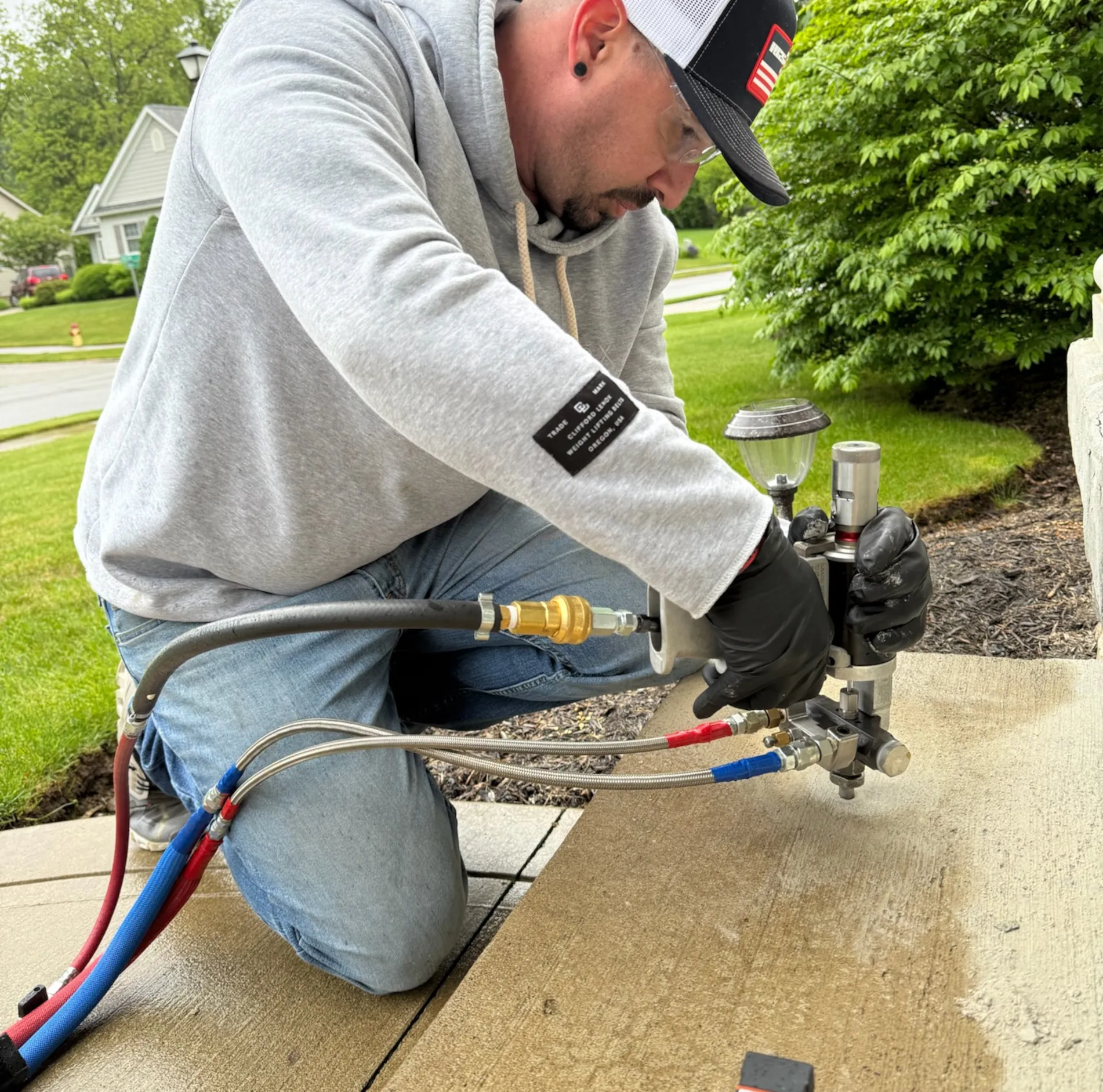
Polyurethane concrete lifting uses a high-density expanding foam instead of a heavy cement slurry. The foam is injected beneath the slab through small, strategically placed holes.
Once injected, it expands to fill voids, lift the concrete, and help stabilize the soil below.
This is the method Poly Guys uses because it is cleaner, faster, and better suited for long-lasting concrete leveling.
When homeowners compare mudjacking vs polyurethane, the real difference comes down to performance.
Polyurethane foam is lightweight but strong. It lifts settled concrete without putting extra stress on the soil below. Because the material expands in a controlled way, it also allows for a more accurate lift.
Key benefits include:
For homeowners who want the job done once and done right, polyurethane offers a more dependable repair. Read more about why polyurethane is better here.
For busy driveways, sidewalks, and garage floors, downtime matters.
Mudjacking often requires a longer wait before the surface is ready for regular use. That can be frustrating when the area is part of your daily routine.
Polyurethane foam injection cures quickly. In many cases, the slab is ready for foot traffic within minutes and vehicle traffic shortly after. That means less disruption and a faster return to normal use.
Concrete leveling is not just about raising a slab. It needs to be lifted evenly and carefully.
Older slurry-based methods can be harder to control once the material is pumped under pressure. That can make it more difficult to fine-tune the lift.
Polyurethane foam gives contractors better control throughout the process. That added precision helps create a smoother, more even result and reduces the chance of overcorrection.
The real test of any repair is how it performs over time.
Heavy fill materials can break down, shift, or contribute to future settlement, especially in areas affected by moisture. That is one reason some slabs end up sinking again after a traditional repair.
Polyurethane foam is designed for durability. It resists water, keeps its shape, and supports the slab without adding unnecessary weight. That makes it a smarter long-term solution for many concrete leveling problems.
Polyurethane concrete lifting works well for many types of settled concrete, including:
In each case, the goal is the same: restore safety, remove trip hazards, and extend the life of the existing concrete without full replacement. You can find some of our concrete lifting projects on our projects page.
The lowest upfront price is not always the best value.
A repair that fails early or needs to be redone can cost more in the long run. That is why many homeowners choose polyurethane foam lifting over mudjacking when they want better performance and less disruption.
Polyurethane offers:
Mudjacking and polyurethane can both raise sunken concrete, but they do not deliver the same results.
Mudjacking relies on a heavy slurry that can add stress to already weak soil. Polyurethane foam injection is lightweight, precise, fast-curing, and built for better long-term performance.
At Poly Guys, we use polyurethane concrete lifting because it gives homeowners a cleaner repair and a more reliable outcome. If you want to fix sinking concrete without the mess and drawbacks of older methods, polyurethane is the better choice. Contact us today!