
October 28, 2026
When people think about sinking concrete, driveways and sidewalks usually come to mind first. But settlement isn't limited to outdoor slabs.
Basement floors can sink, too.
A basement floor with low spots, uneven sections, or separation may signal that the support beneath the concrete has changed. Depending on the slab's condition and the cause of the settlement, concrete lifting may restore the floor without tearing it out and replacing it.
Here's what homeowners should know before deciding how to address a settled basement floor.
Basement floors rely on the soil and base material underneath them for support.
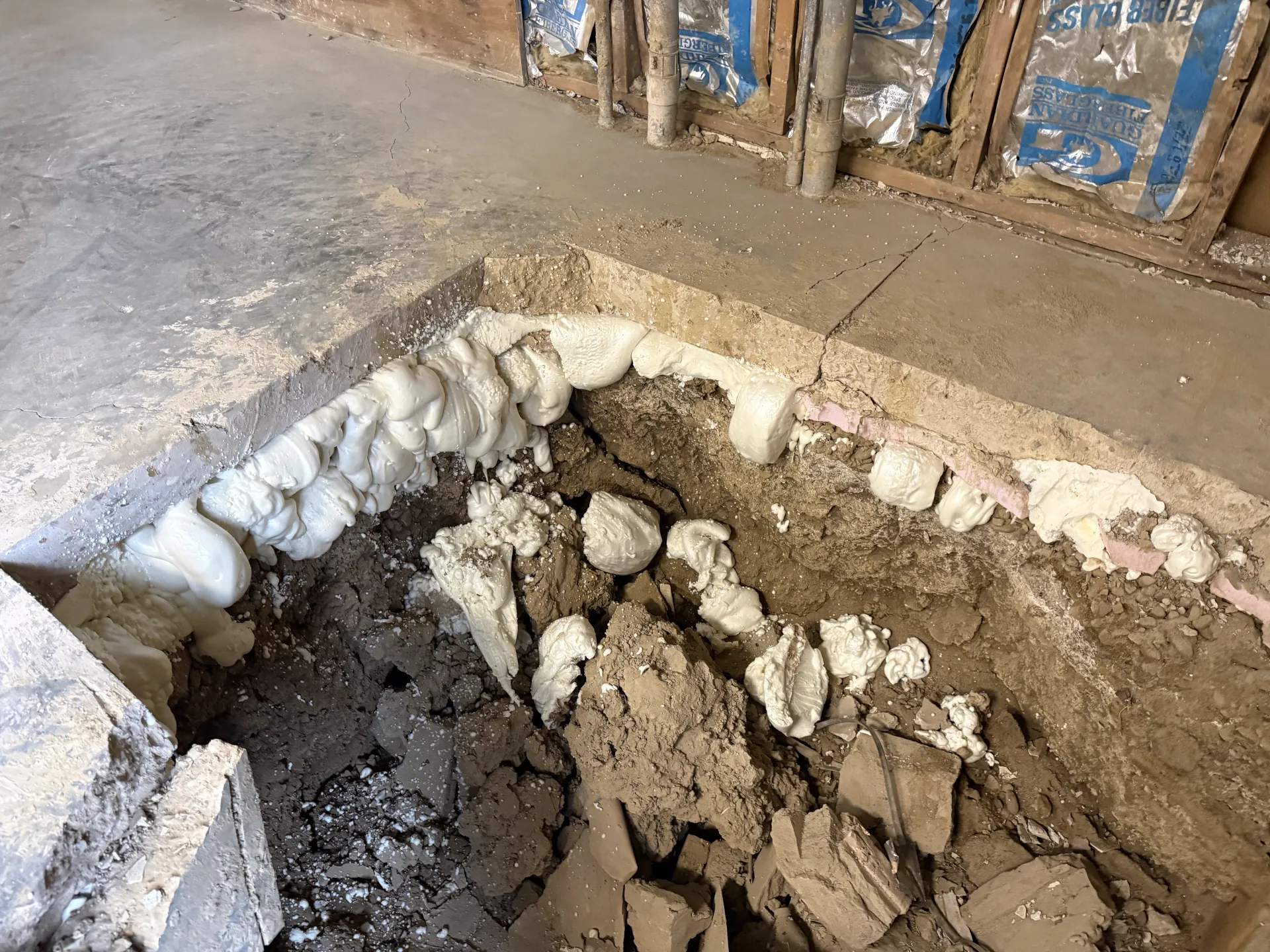
If that material wasn't properly compacted during construction, or if conditions beneath the slab change later, empty spaces can develop. Once the concrete loses support, sections of the floor may begin settling.
Potential causes include:
The visible problem is the uneven concrete. The actual problem may be underneath it.
That's why simply covering an uneven basement floor doesn't necessarily solve anything.
Some concrete cracks are normal, particularly as concrete ages. A crack by itself doesn't automatically mean the floor needs concrete leveling.
Changes in elevation deserve more attention.
Watch for signs such as:
If you're unsure, an evaluation can help determine what's happening beneath the floor.
Polyurethane concrete lifting restores settled concrete by adding support underneath the existing slab.
Small holes are drilled into strategic areas of the basement floor. Technicians then inject polyurethane underneath the concrete.
As the material expands, it fills voids beneath the slab and creates controlled lifting pressure. The technician monitors the movement and gradually raises the affected concrete toward the desired elevation.
Once the polyurethane cures, it provides lightweight support beneath the floor.
The existing slab stays in place, eliminating the need for the extensive demolition required for replacement when lifting is an appropriate option.
Basement projects present different challenges than open exterior areas.
Breaking out and replacing an interior concrete floor can involve significant demolition, debris, dust, and disruption. Access can also be more difficult because all materials and equipment must move through the home.
Concrete lifting is considerably less invasive.
Polyurethane concrete lifting requires relatively small injection holes and allows technicians to work directly through the existing floor. It also cures quickly, reducing the amount of time the space needs to remain out of use.
No, and this is an important distinction.
Concrete lifting solves settlement. It does not repair every possible basement or foundation problem.
If the concrete is severely deteriorated, extensively broken, or affected by a larger structural issue, lifting may not be the appropriate solution. Water issues should also be diagnosed separately, since leveling alone won’t fix the source. That’s why we evaluate the floor before recommending polyurethane concrete lifting. A reputable concrete leveling company should be willing to tell you when lifting isn't the right repair.
Lifting a basement floor doesn't make existing cracks disappear.
The purpose of the process is to restore support and elevation. Existing cracks may still be visible and may require separate repair depending on their condition.
This is another reason an assessment matters. Homeowners should understand what concrete lifting can realistically accomplish before work begins.
The goal is a stable, properly supported slab, not the appearance of brand-new concrete.
Replacement may be necessary when a slab is too damaged to save. When the existing concrete remains structurally sound, however, replacing the entire floor can mean removing usable concrete unnecessarily.
Replacement typically involves breaking up the slab, hauling away debris, preparing the base, pouring new concrete, and allowing it to cure.
Concrete lifting works with the slab that's already there.
That can mean:
The right choice ultimately depends on the condition of the floor and what's causing it to settle.
A slightly uneven basement floor may be easy to overlook, especially in an unfinished space. However, changes in the floor can indicate that the support beneath the concrete has shifted or settled.
Identifying the cause early can help prevent further movement and give you more repair options. In many cases, polyurethane concrete lifting can raise settled areas and fill empty spaces beneath the slab, restoring support without the disruption of a complete replacement.
Before committing to a new basement floor, it's worth finding out what's causing the problem. A professional evaluation can determine if the existing concrete can be safely lifted and stabilized.